
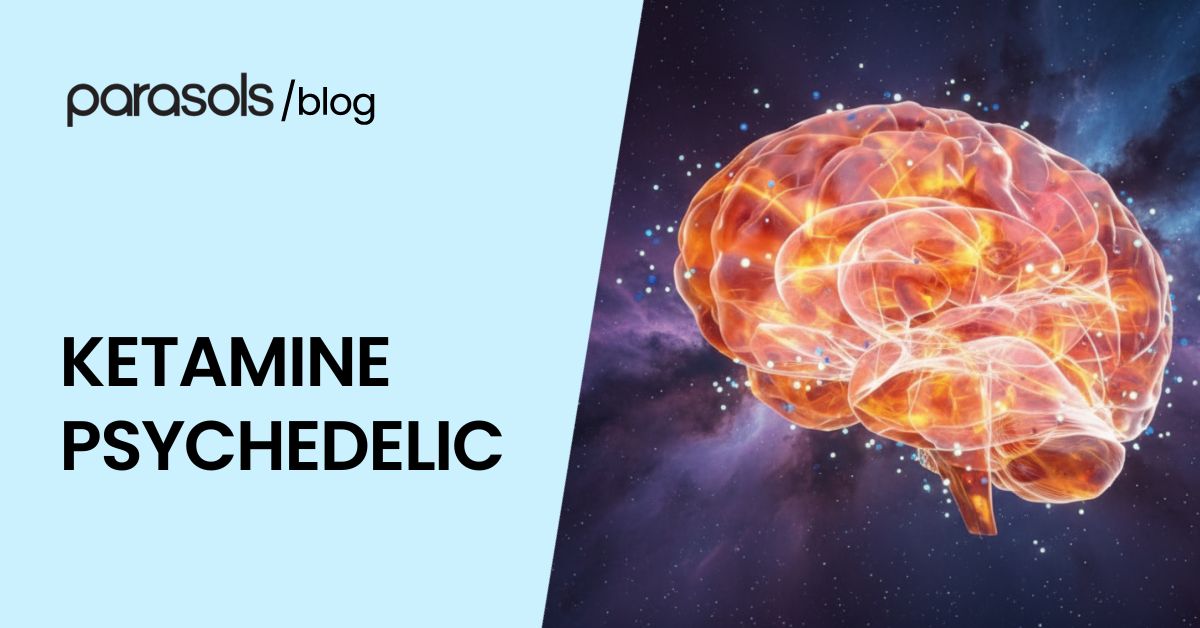
As interest in psychedelic therapy continues to grow, the ketamine psychedelic has emerged as one of the most talked-about treatment options in modern mental health care. Originally developed as an anesthetic, ketamine is now widely used in therapeutic settings for depression, anxiety, PTSD, and treatment-resistant mental health conditions. This rise has sparked an essential question among clinicians, researchers, and curious readers alike: Is ketamine a psychedelic?
The answer is not as simple as a yes or no. Ketamine does not fit neatly into the traditional definition of a “classical psychedelic.” Yet, many experts argue that its effects, outcomes, and experiential qualities place it firmly within the psychedelic medicine space. Understanding this debate helps clarify ketamine’s role in therapy and why it is becoming such a powerful tool in mental health treatment.
Key Takeaways
- Ketamine is not a classical psychedelic, but it is widely considered a psychedelic medicine based on its experiential and therapeutic effects.
- Unlike substances like psilocybin or LSD, ketamine works on the brain’s glutamate and NMDA receptors rather than serotonin 5-HT2A receptors.
- Psychedelic experiences are defined by outcomes and subjective effects such as insight, ego dissolution, and altered perception, not chemistry alone.
- Ketamine therapy often produces hallmark psychedelic experiences, including ineffability, time distortion, third-person perspective, and emotional insight.
What Does “Psychedelic” Actually Mean?
To understand whether ketamine qualifies as a psychedelic, it helps to start with the origin of the term itself. The word “psychedelic” was coined in the 1950s by psychiatrist Humphry Osmond. It originates from the Greek words psyche, meaning "mind," and delos, meaning "to reveal." Together, the term translates to “mind-manifesting.”
Under this definition, a psychedelic experience reveals how the mind works. It is not limited to one chemical or compound. Instead, it refers to experiences that bring deep introspection, altered perception, emotional insight, and a sense of expanded awareness.
This broader meaning is important because modern debates often focus too narrowly on chemistry. While early psychedelic research centered on substances like LSD and psilocybin, the lived experience of altered consciousness has always been at the heart of what makes something psychedelic.
Classical Psychedelics vs Ketamine

Much of the disagreement around ketamine stems from how people define a “real” psychedelic. Classical psychedelics are typically described as compounds that act primarily on the brain’s serotonin 5-HT2A receptors. Psilocybin and LSD fall squarely into this category.
Ketamine works differently. Rather than targeting serotonin receptors, ketamine acts on the brain’s glutamate system and NMDA receptors. Because of this, some researchers argue that ketamine should be classified strictly as a dissociative anesthetic, not a psychedelic.
However, this argument focuses solely on the mechanism of action, ignoring the outcomes. While ketamine’s chemistry differs, the experiences it produces and the therapeutic benefits it offers often mirror those of classical psychedelics. This has led many clinicians and researchers to support ketamine’s inclusion in psychedelic medicine.
Hallmarks of a Psychedelic Experience
Rather than defining psychedelics only by chemistry, many experts look at experiential hallmarks. These characteristics help identify whether an experience itself is psychedelic in nature, regardless of the substance involved.
One hallmark is ineffability. Psychedelic experiences are often challenging to put into words. People report that language feels insufficient to describe what they felt or saw during the experience.
Another is the presence of novel insights. Psychedelics can reveal emotions, memories, or realizations that feel new and deeply meaningful, even if they relate to long-standing personal patterns.
Ego dissolution is also common. This involves a temporary loosening of the sense of self, where individuals feel less defined by their usual identity or mental boundaries.
Many psychedelic experiences include a sense of timelessness, where time feels distorted or irrelevant. Others report a feeling of accessing a higher-order reality that feels more real than everyday consciousness.
Finally, psychedelics often allow a third-person perspective. People can observe their thoughts, behaviors, or emotional patterns from a detached viewpoint, which can lead to a deeper understanding of themselves.
Does Ketamine Produce Psychedelic Experiences: Ketamine Therapy
When measured against these hallmarks, ketamine checks many of the same boxes as classical psychedelics. During ketamine-assisted therapy, individuals frequently report ineffable experiences that are difficult to articulate. Time and space may feel distorted, and the sense of self can temporarily dissolve.
Many people describe gaining new insights into their emotions, trauma, or behavioral patterns. This often occurs from a third-person perspective, where individuals feel like observers of their own inner world rather than being consumed by it.
These experiences are not random or chaotic; they are carefully orchestrated. In clinical settings, ketamine sessions are carefully guided, with preparation beforehand and integration afterward. This structure enables insights gained during the experience to translate into tangible improvements in mental health in the real world.
From an experiential standpoint, ketamine therapy aligns closely with what most people would consider a psychedelic experience.
Neurobiological Similarities Across Psychedelic Medicines
Although ketamine operates through a different brain system, its effects on the brain share similarities with other psychedelic compounds. Research shows that ketamine increases neuroplasticity, which is the brain’s ability to form new neural connections.
Ketamine also promotes increased communication between different brain regions. This cross-talk allows for new patterns of thinking and emotional processing, which can be especially beneficial for people stuck in rigid thought loops associated with depression or anxiety.
Another shared feature is reduced activity in the default mode network. This network is associated with self-referential thinking and rumination. Quieting it can help people step outside habitual negative thought patterns, creating space for new perspectives.
These neurobiological outcomes are similar to those observed with substances like psilocybin and MDMA, even though the chemical pathways differ. The result is a brain state that supports emotional flexibility, insight, and healing.
Why Classification Matters Less Than Outcomes
While academic debates about classification are fascinating, many clinicians argue that results matter more than labels. The mental health crisis in the United States affects millions of adults, with anxiety, depression, trauma, and substance use disorders reaching unprecedented levels.
Psychedelic-assisted therapies, including ketamine, have shown promising results for individuals who do not respond to traditional treatments. For many patients, ketamine therapy offers rapid relief from symptoms that have persisted for years.
Whether ketamine is labeled a classical psychedelic or a non-classical one does not change its impact on those who benefit from it. What matters is access to safe, effective treatment options that improve quality of life.
As research continues, the definition of psychedelic medicine is expanding to include compounds that may not fit historical categories but clearly deliver psychedelic experiences and therapeutic value.
Is Ketamine a Psychedelic?

Based on experiential hallmarks, neurobiological effects, and therapeutic outcomes, it is fair to say that ketamine functions as a psychedelic medicine. While it differs from classical psychedelics in how it interacts with the brain, it produces many of the same transformative experiences and mental health benefits.
Ketamine’s origins as an anesthetic do not limit its current role in psychedelic therapy. With proper preparation, setting, and integration, ketamine sessions can be deeply introspective, emotionally meaningful, and psychologically healing.
As psychedelic medicine continues to develop, ketamine stands as a powerful example of why rigid definitions may need to give way to broader understanding. In the end, the psychedelic nature of ketamine is best measured not by chemistry alone, but by the depth of insight and healing it provides. Parasols offer high quality mushroom gummies like our pineapple non detect shroom gummies.
Conclusion
Ketamine occupies a unique and essential place in modern psychedelic medicine. While it may not meet the strict definition of a classical psychedelic, its experiential qualities and therapeutic outcomes strongly support its inclusion in the psychedelic space. As mental health treatment continues to develop, ketamine offers hope, flexibility, and meaningful change for many individuals seeking new paths to healing.
To learn more educational resources and insights into modern cannabis and psychedelic-adjacent topics, visit indacloud.co.

Leave a comment
All comments are moderated before being published.
This site is protected by hCaptcha and the hCaptcha Privacy Policy and Terms of Service apply.